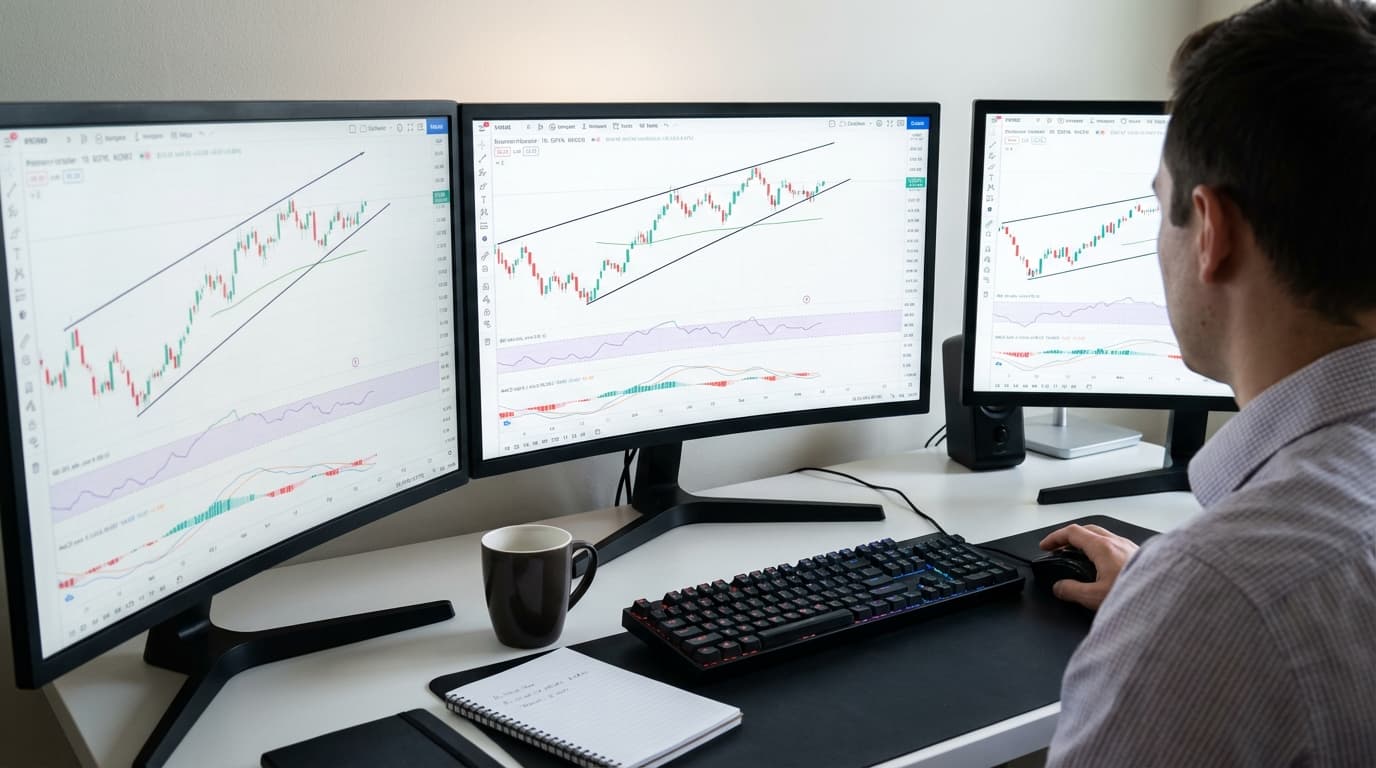
A day trading journal captures single-session decisions. A swing trading journal must capture multi-day context — because the decisions that matter in swing trading happen across days, not within them.
The additional data fields that matter for swing trading:
Entry thesis in writing: Every swing position should have a one-sentence written thesis at entry. Not the setup name — the actual thesis. 'I believe the 3-week consolidation in XYZ represents accumulation, and the volume break today is the start of the next leg.' If you cannot write this sentence, the position is not clear enough to hold. This written thesis is also the reference point when the position moves against you — is the thesis still intact, or has something changed?
Over-the-weekend decision log: Holding through weekends is one of the highest-variance decisions in swing trading. Log every Friday: Is this position worth holding over the weekend? What specific risks (earnings, macro data, geopolitical events) exist? Has my thesis changed? This 60-second check prevents the 'forgot why I was in this' problem that causes bad Monday-morning exits.
Multi-day behavioral arc: Day traders assess emotional state within a session. Swing traders should track it across sessions. If you have been anxious about a position for 3 consecutive days, that is a signal — either the position is too large, the thesis is unclear, or something about the holding period is incompatible with your psychological profile. All three are addressable. None of them are visible without multi-session tracking.