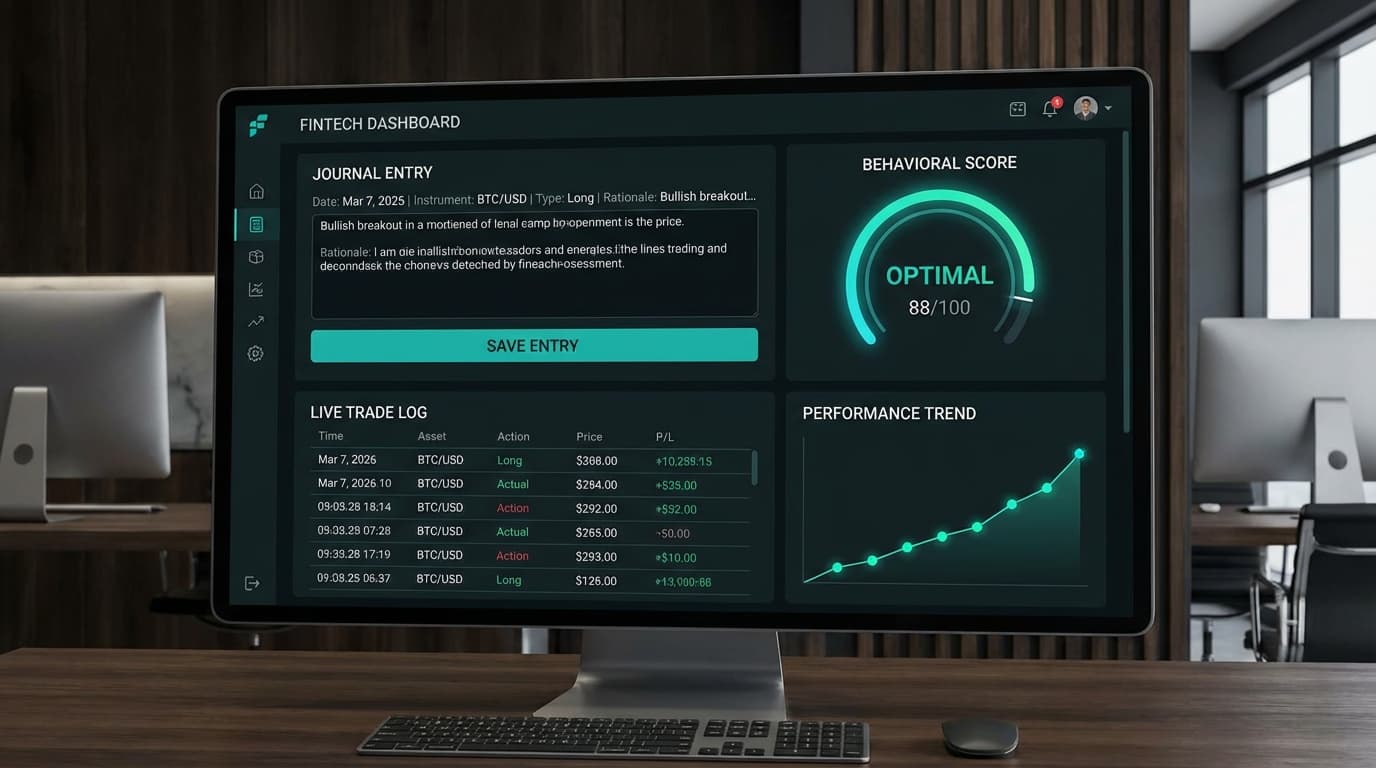
Not all journals are created equal. There is a clear hierarchy based on what you track and what you can learn from it.
Level 1 — Basic P&L Log: You record entry, exit, size, and profit/loss. This is better than nothing, but only slightly. You can calculate your win rate and average R, but you cannot diagnose why you are losing or what conditions favor your edge. Most beginners start here and never leave.
Level 2 — Rationale and Notes: You add your setup rationale (what triggered the trade), market context (trend, session, news), and a post-trade note on execution quality. Now you can start asking useful questions: Do I perform better in trending or ranging markets? Do my FOMO entries have worse R than my planned entries? This is where most traders plateau.
Level 3 — Behavioral Scoring and Pattern Mining: You add emotional state at entry (1-10 confidence, any FOMO/revenge/boredom flags), a behavioral score post-trade, and tags that let you filter across hundreds of trades. Over time, you can see that your setup has a 58% win rate — but your win rate drops to 34% when you enter on FOMO, and climbs to 71% when you wait for confluence. The setup is not the problem. The behavior is.
According to research published in the Journal of Finance by Barber and Odean (2000), individual traders who overtrade underperform the market by an average of 6.5% annually — and overtrading is almost always a behavioral pattern that a Level 3 journal would surface within weeks.