Updated: 2026-03-07
Paper Trading Journal: What to Track (And What Paper Trading Can't Teach You)
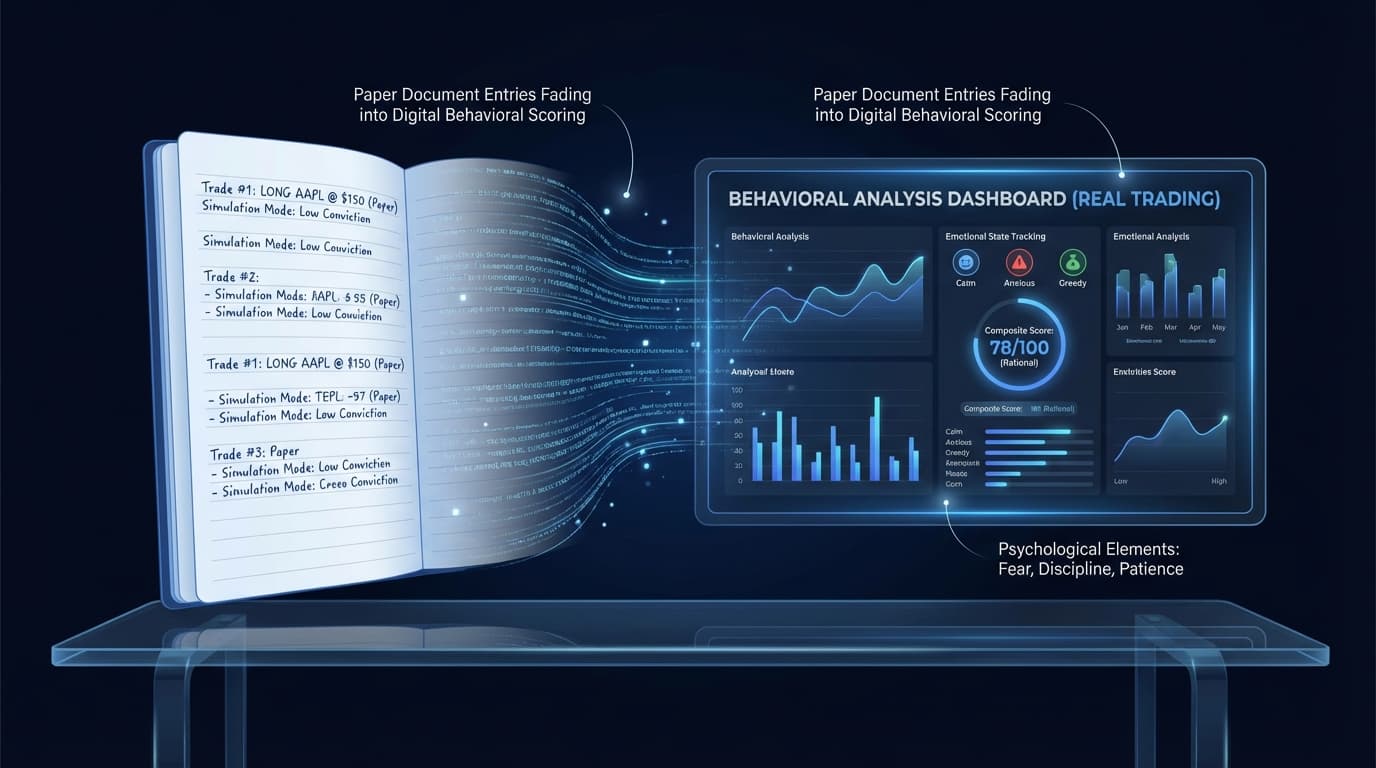
Most traders paper-trade profitably. Then they fund a live account and lose. The pattern is so common it has become a cliché — but the reason behind it is not intuitive. It is not that paper trading is useless. It teaches you how to read setups, manage entries, and build a repeatable system. The problem is that it trains everything except the part that actually kills real accounts: your behavioral response to real capital at risk. According to regulatory disclosures compiled by ESMA and the FCA across European brokers, 74–78% of retail trading accounts lose money in any given quarter — despite the fact that many of those traders had practiced on simulated accounts before depositing. Paper trading is preparation, not proof of readiness. A paper trading journal is a critical first step, but only if you know what it can and cannot teach you.