Updated: 2026-03-08
Trading System Development: How to Build a Rules-Based Trading System
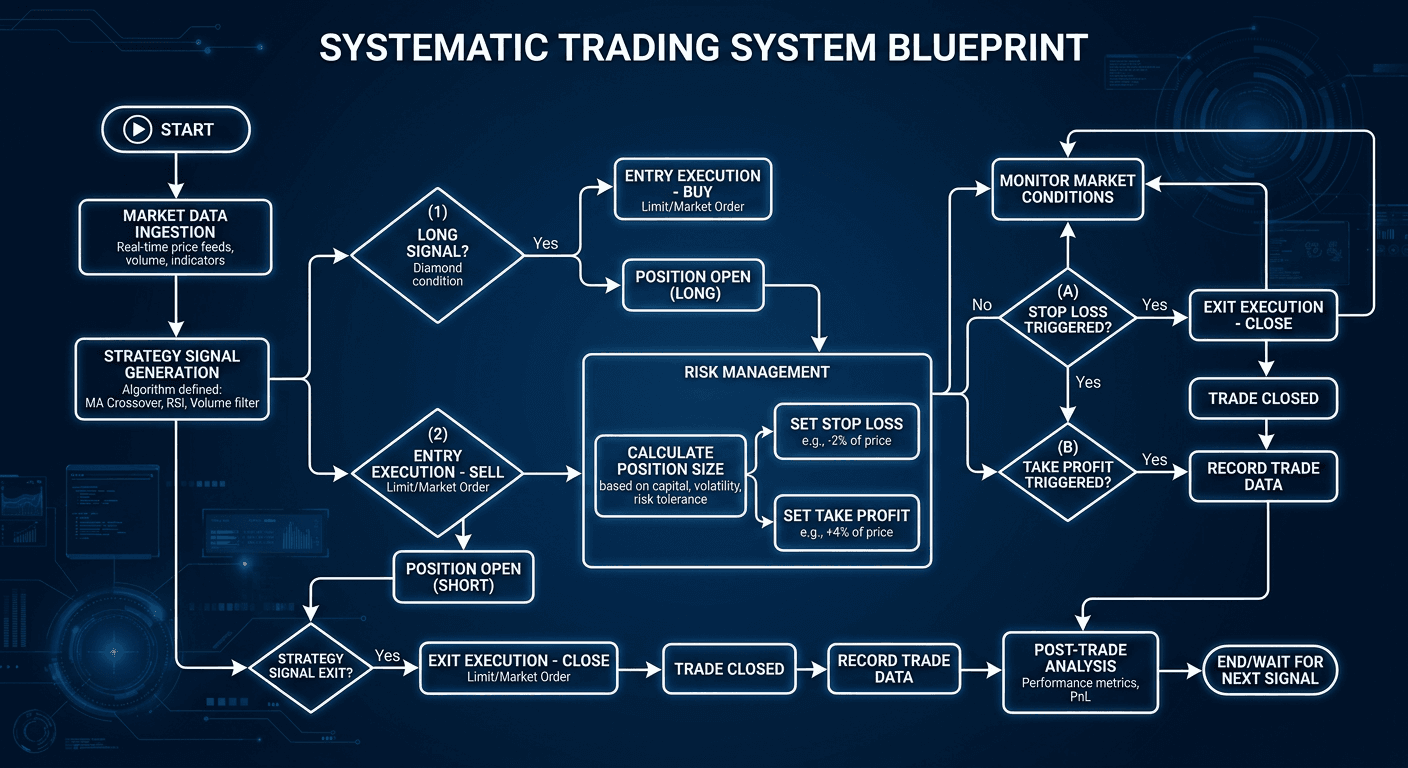
Discretionary trading — making real-time decisions without a defined rule set — is how most retail traders operate. It is also why most retail traders produce inconsistent results. A 2022 study in the European Journal of Finance found that retail traders who documented explicit entry and exit rules before sessions and audited their rule compliance afterwards outperformed undocumented discretionary traders by an average of 23% over 12 months. The advantage did not come from better rules — the documented groups' strategies were similar in quality to the undocumented groups'. The advantage came from consistency: rules-based traders made the same decision in the same situation repeatedly, allowing their edge to compound. Undocumented discretionary traders made different decisions in similar situations, introducing variance that overwhelmed their edge. A trading system is the formal expression of a trader's rules — codified precisely enough that there is no ambiguity in what to do under any market condition. This guide covers how to build one.