Updated: 2026-03-08
Harmonic Patterns: How to Trade Them
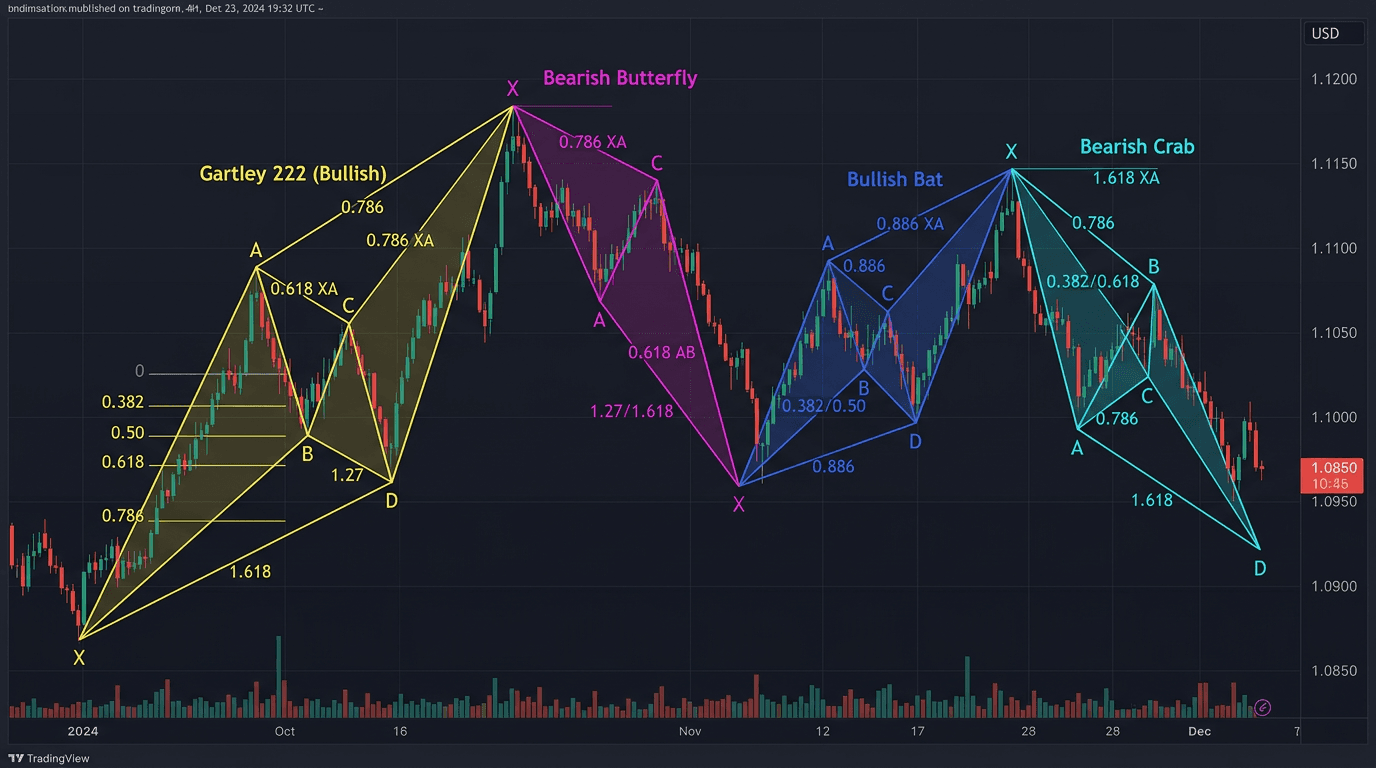
Harmonic patterns — defined as geometric price structures that use Fibonacci ratios to identify precise reversal zones where price is statistically likely to change direction — were first described by H.M. Gartley in his 1935 book 'Profits in the Stock Market' and later expanded by Scott Carney into the Bat, Butterfly, and Crab patterns. According to research published in the Journal of Technical Analysis by Carney (2004), harmonic patterns identified at Potential Reversal Zones (PRZ) demonstrated a completion rate exceeding 70% in trending markets when all Fibonacci ratios aligned within tolerance — with the Bat pattern showing the highest overall precision due to its tighter ratio requirements. Unlike subjective chart patterns, harmonic patterns have specific, measurable Fibonacci rules that either confirm or invalidate the pattern — making them one of the few technical setups that can be defined with mathematical precision.