Price action trading requires a specific journaling approach because the quality of the setup at entry is not visible in the outcome. A correctly identified setup at a genuine structural level can result in a loss due to variance; an incorrectly identified setup taken impulsively can occasionally win. Without journaling the setup quality at entry — not just the outcome — you cannot distinguish good process from lucky results.
Required journal fields for price action traders:
Structural context at entry: Was this trade at a pre-mapped level or a new level identified in real time? (Track this separately — trades at pre-mapped levels should outperform real-time level trades over a large sample.)
Setup checklist score: Of your defined entry criteria, how many did this trade meet? A trade meeting 3 of 4 criteria should perform differently than a trade meeting all 4. If it doesn't over 100+ trades, your criteria may not be predicting quality.
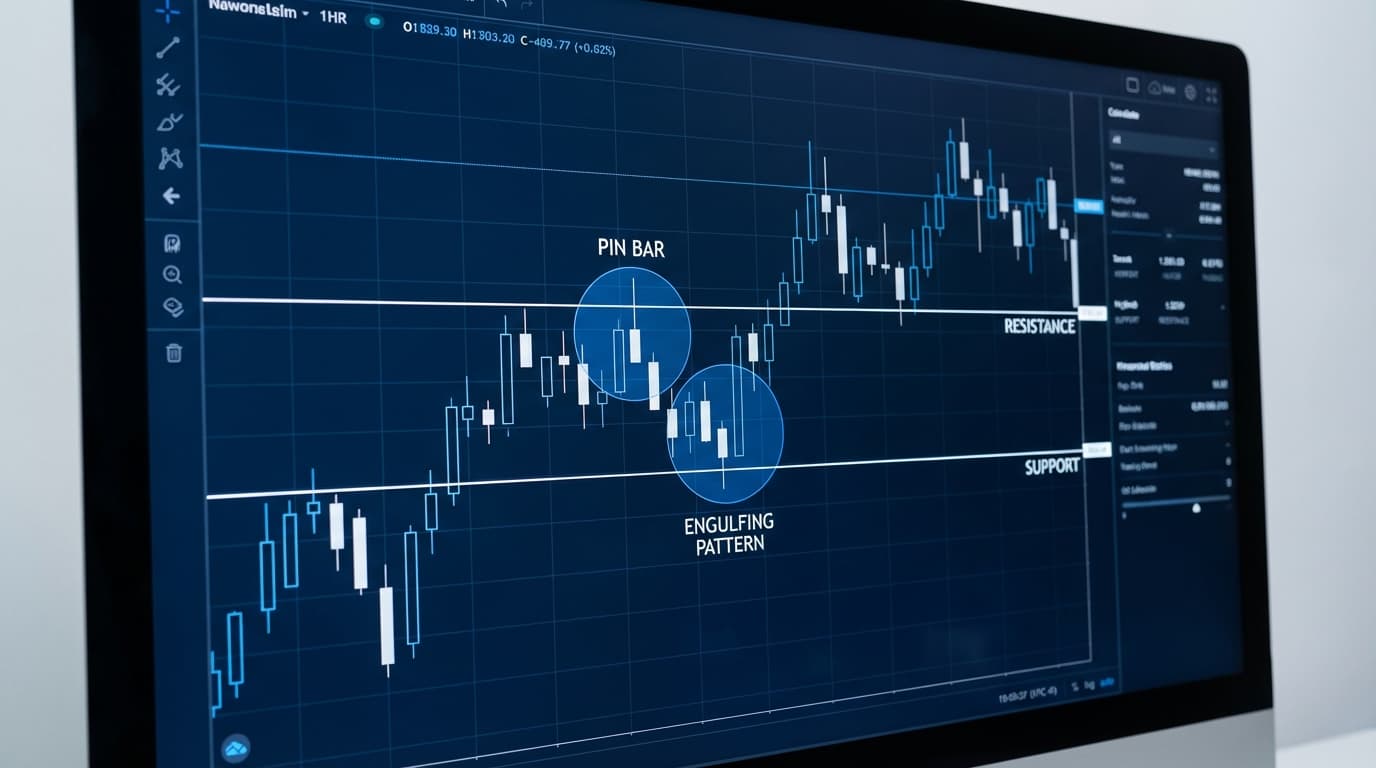
Chart screenshot at entry: Take a screenshot the moment before you enter the trade — not after, when bias distorts your memory of what the chart looked like. Reviewing actual chart conditions at entry is the only honest feedback mechanism for price action traders.
According to Steenbarger's research on deliberate practice in trading, the traders who improve most rapidly in price action are those who build explicit pattern libraries from their own trade data — annotating what the chart looked like when their best trades triggered, and finding the distinguishing features that separate them from lookalike setups that failed.