Updated: 2026-03-08
Mean Reversion Strategy: How to Trade Extremes With Statistical Edge
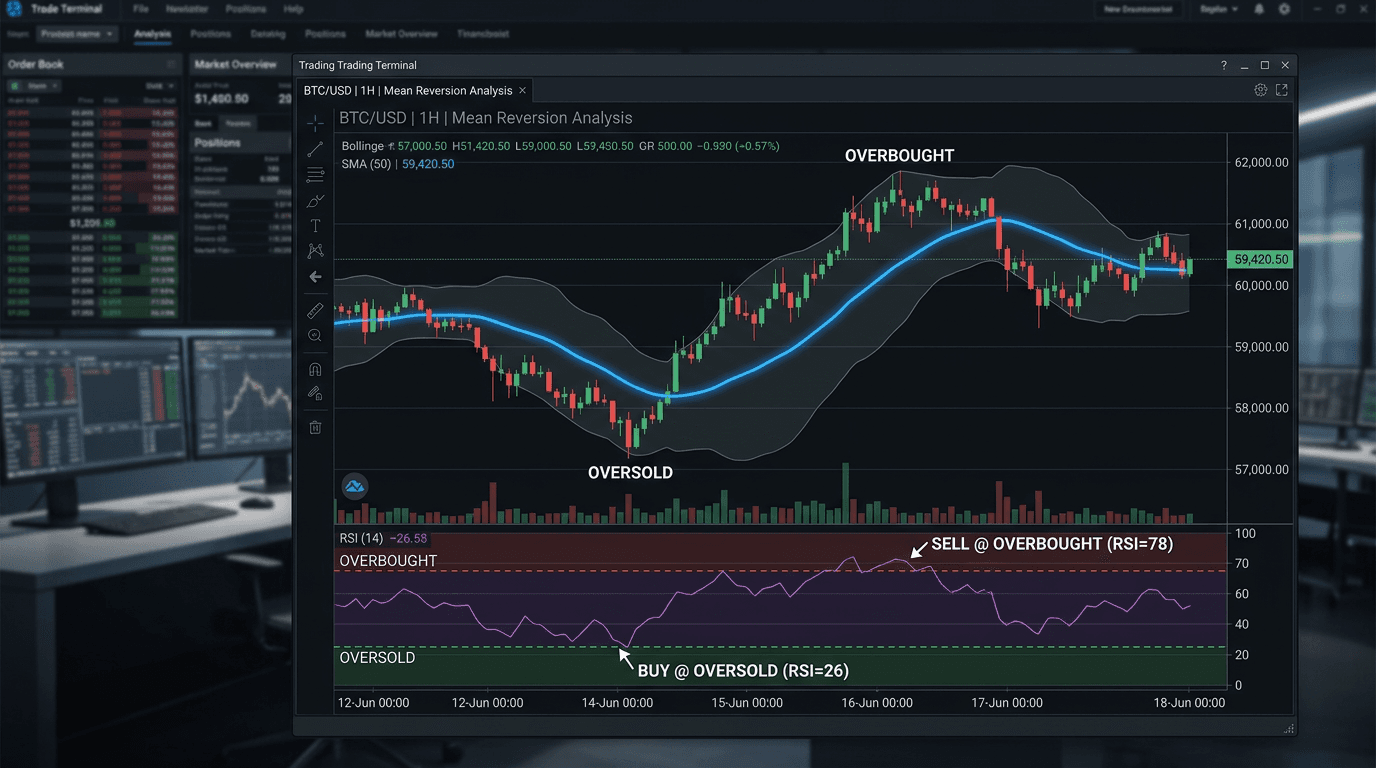
Mean reversion is the statistical tendency of prices to return toward their average after extreme moves. The concept is grounded in financial theory: over-reaction to news, momentum-chasing, and liquidity imbalances drive prices temporarily away from fair value, creating a reversion opportunity when the extreme resolves. Larry Connors and Cesar Alvarez's 2009 book 'Short Term Trading Strategies That Work' documented through backtesting that buying the S&P 500 when the 2-period RSI fell below 10 and selling when it rose above 90 produced a win rate of over 70% from 1995 to 2008. A 2020 study in the Journal of Portfolio Management confirmed mean reversion signals in equity indices, with short-term reversal strategies producing statistically significant alpha in 26 of 33 international markets tested. Mean reversion does not work in all conditions — in strongly trending markets, it is capital destruction. The skill is knowing when the market is in a mean-reversion regime and when it is in a trending regime. This guide explains the statistical foundations of mean reversion, which indicators have documented edge, how to identify regime, and how to build a journaling system that measures your mean reversion performance.