Updated: 2026-03-06
How to Recover From a Trading Drawdown Without Making It Worse
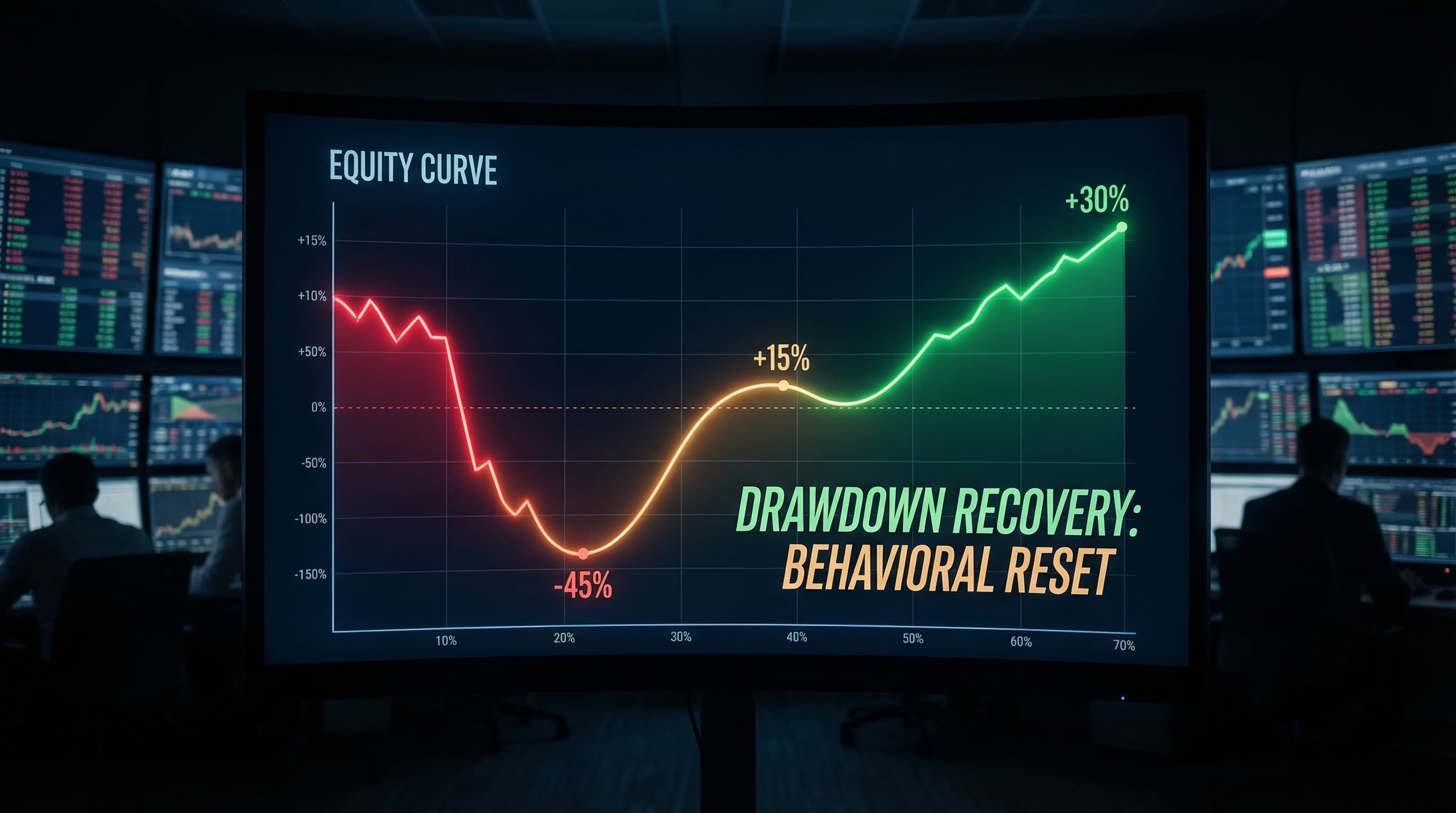
The defining characteristic of a drawdown is not the losses — it is what traders do in response to them. Kahneman and Tversky's 1979 research on loss aversion demonstrates that losses feel approximately twice as painful as equivalent gains feel good. In trading, this asymmetry activates a predictable set of behavioral responses: increased position sizing to recover faster, extended trading sessions, loosened entry criteria, and revenge trading after stop-outs. Each of these responses, which feel rational in the moment, systematically deepens the drawdown rather than shortening it. Research from Barber and Odean (Journal of Finance, 2000), tracking 66,465 brokerage accounts, found that the most active traders — who are by definition those most likely to be reacting to recent losses — underperformed passive investors by 6.5% per year on average. The recovery instinct is the problem. The protocol below replaces the instinct with a systematic, data-driven response.